
Written by Hammer PCs
With the recent AI craze that’s been hitting the consumer hardware market, I understand that there can be a lot of pressure and differing opinions about what you need in a gaming graphics card. How much VRAM do you need, should you use AMD, Nvidia, or Intel? Is it more wise to purchase a video card new from a retailer or is it a smarter buy to get a previous-generation card off of the used market?
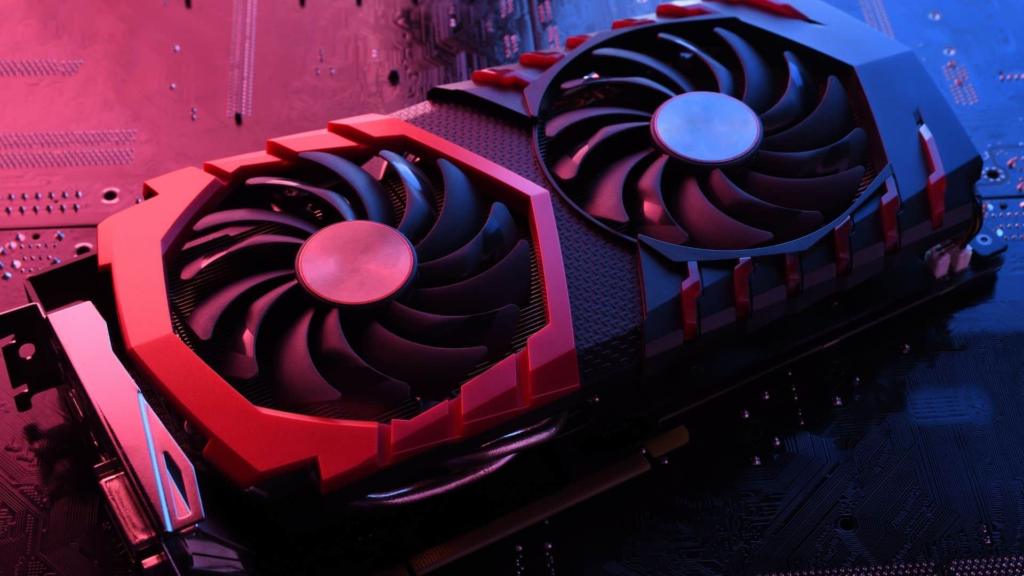
With the launch of Nvidia’s RTX 50 series GPUs and AMD’s 9000 Series GPUs, there’s lots of new and flashy hardware on the market, but those come with high prices. So how should you decide which video card is the right fit for you, and what price range is the sweet spot for graphics cards?
Pricing
Nvidia GPU MSRP pricing is as follows:
RTX 5090: $1,999
RTX 5080: $999
RTX 5070 Ti: 749
RTX 5070: $549
RTX 5060 Ti 16gb: $429
RTX 5060 Ti 8gb: $379
RTX 5060: $299
RTX 5050: $249
AMD GPU MSRP pricing is as follows:
RX 9070 XT: $599
RX 9070 GRE: $550
RX 9070: $549
RX 9060 XT 16gb: $349
RX 9060 XT 8gb: $299
These are all MSRP prices, but even over a year after these cards launched, prices are virtually never at or below this price. In this article from Wccftech we can see that an RTX 5070 being down to $579 ($20 over MSRP) is considered a spectacular price because they have “been selling for nearly $650-700 for months now.”
With these high prices, most are left to wonder what is actually the minimum for gaming nowadays, and how much can you get away with spending to play games at 1080p, 1440p, or 4K at 60, 144, or 240+ FPS?
VRAM and my GPU Picks
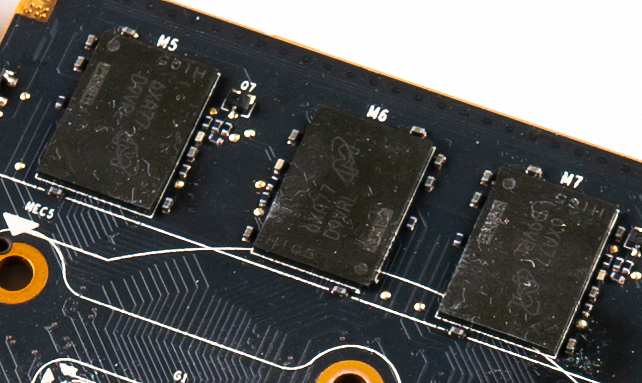
VRAM (Video Random Access Memory) is a special type of memory that’s integrated directly into your graphics card. It works to temporarily and quickly store visual data like 3D renders, textures, lighting effects, and more. Because of the memory storage, it’s important to know how much VRAM you actually need.
For gaming in 1080p, I’d recommend 8gb of VRAM, with 4-6gb being the minimum depending on the games you play. Many light, older, or competitive games can run very well on even 4gb of VRAM, think games like Fortnite, Valorant, Counter-Strike 2, GTA V, and games of that caliber. For more demanding games, however, getting a video card with at least 8gb VRAM can be highly beneficial, especially in titles like Cyberpunk 2077, God of War Ragnarok, Helldivers II, Alan Wake 2, and others. At 1080p, if you’re buying new, go for cards like the RTX 5050, 5060, 5060 Ti, or the RX 9060 XT. If buying used, cards like the Nvidia GTX 1660 Super, RTX 2060, RTX 2070, or the AMD RX 5700 XT, 6600 XT, and RX 7600 are all great picks for the right price.
For gaming in 1440p, I’d say that 10-12gb+ is an ideal amount of VRAM, with the minimum being 8gb. 1440p (or 2K) actually has 78% more pixels than 1080p, so a VRAM increase is definitely needed. I personally use a 10gb RTX 3080 in my personal gaming rig, and I have absolutely no issues playing all of my games at 1440p and getting 60+ FPS. If you want to use features like ray tracing or turn settings up to high or ultra most of the time, though, around 12gb VRAM is a great spot to be in. You’d be surprised, though, how well even 8gb of VRAM can still perform at 1440p nowadays. At 1440p, if you’re buying new, go for cards like the RTX 5060 Ti 16gb or RTX 5070, and AMD cards like the RX 9060 XT 8-16gb, or RX 9070. If looking used, I recommend cards like the RTX 2070 Super, RTX 2080 Super, RTX 3060 Ti, 3070, 3070 Ti, RTX 3080, and RTX 4070, or AMD Cards like the RX 7600 XT, 6700 XT, and RX 7700 XT are all great picks.
For 4K gaming, at one more step up, I’d recommend to shoot for 10gb VRAM minimum, and all the way up to 16gb+ for the best performance. 4K is over double the size of 1440p, and is very VRAM intensive. I generally believe that most people should just be gaming at 1080p or 1440p, but if you really want to play at 4K, I’d recommend new GPUs like the RTX 5070 Ti, RTX 5080, RTX 5090, and RX 9070 XT. On the used market, sometimes you can get good deals on cards like the RTX 4070 Super, RTX 4080, RX 7900 XT or XTX, and RX 7800 XT.
Should you buy a used or new GPU?
Buying a new GPU is definitely ideal, but sometimes the price can be hard to justify, and there may be better value on the used market.
At Hammer PCs, I’m a big proponent of buying used graphics cards. They can be older by 1, 2, 3, or even more generations depending on your needs, but can provide killer value. Some of my favorite used GPUs, for example, are the RTX 2070 Super and RTX 2080, and the RX 5700 XT, which all perform incredibly at 1080p and can hold their own in 1440p, even though they were released 7-8 years ago!
However, there are risks to buying used. Many used cards, especially 5 years or older, may run hot and might need a thermal paste or even thermal pad swap. If you don’t feel comfortable opening a GPU and replacing the thermal paste, it might be better to buy new.
There is also a possibility of defects. Things like memory instability, artifacting, corrosion, rusting, and others can all plague used GPUs, especially if they were in heavily worked environments or other bad conditions. Make sure that when you get a used graphics card, you test it thoroughly.
Sites like Jawa.gg, Reddit R/Hardwareswap, and eBay are all great places to look if you’re wanting to purchase a pre-owned video card.